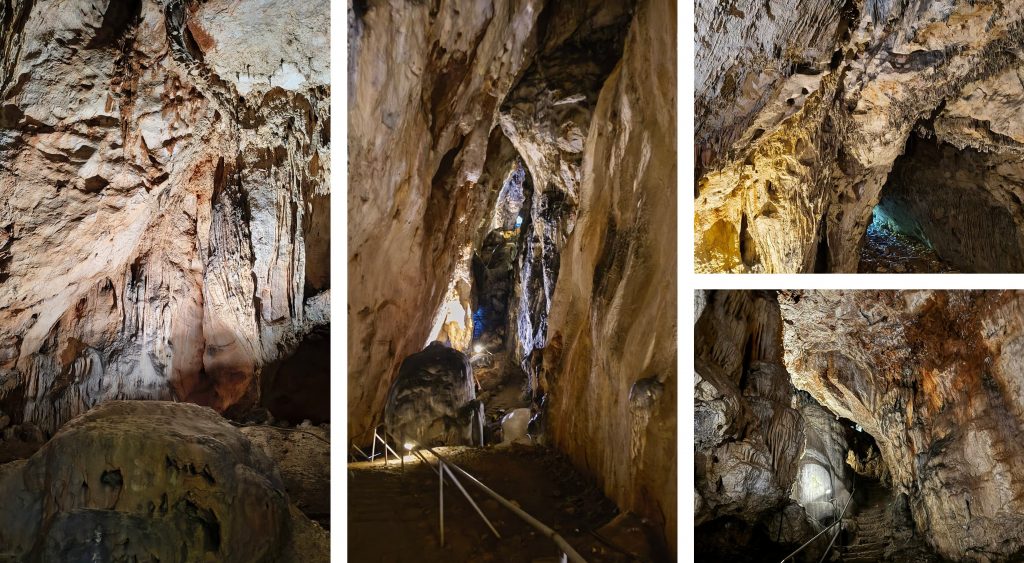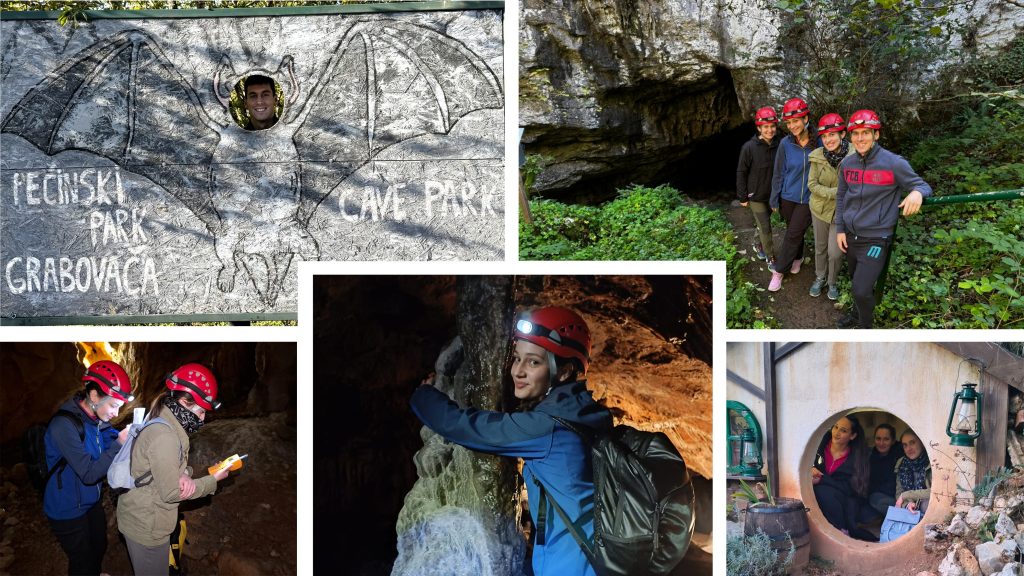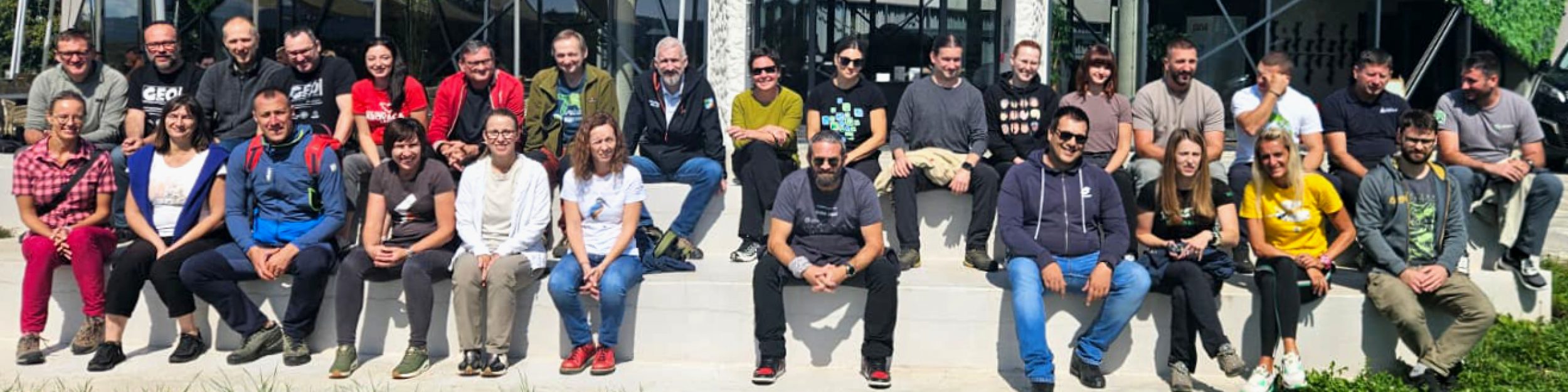
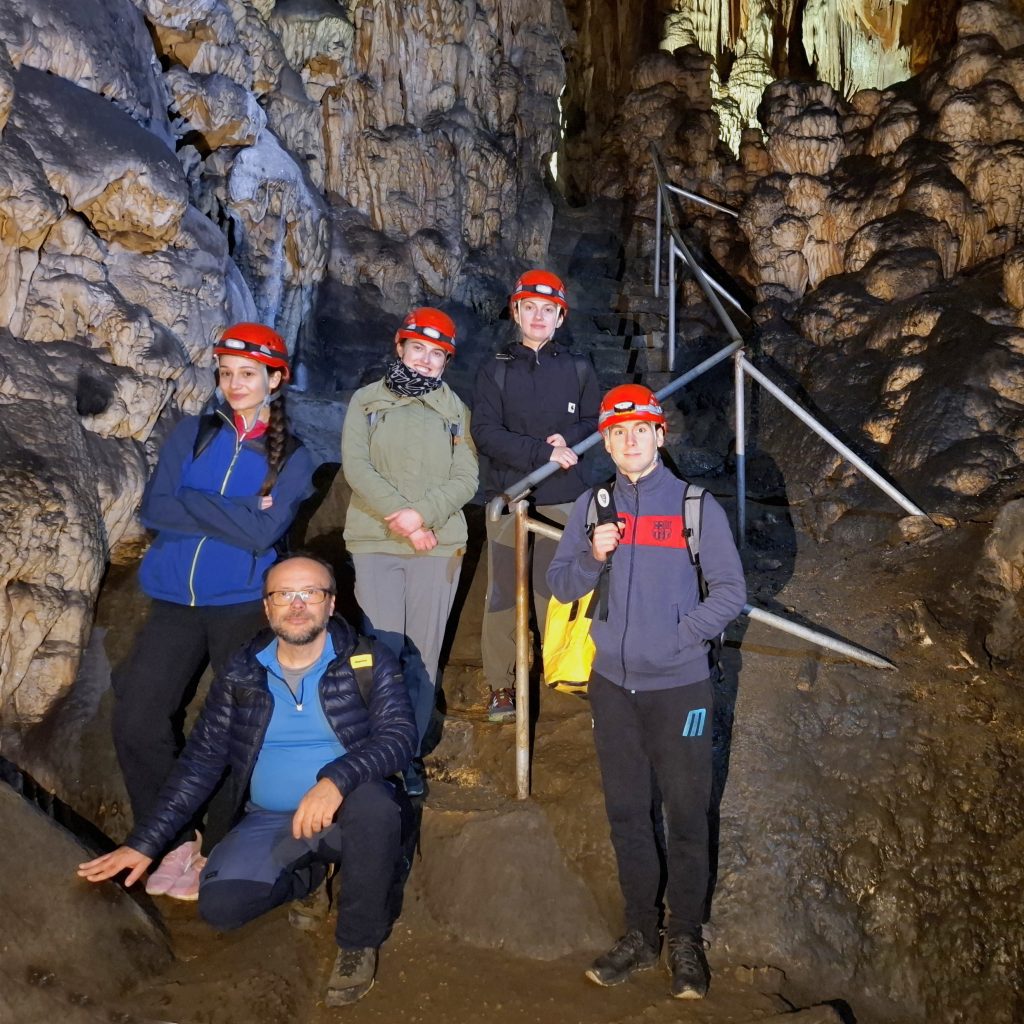
As part of the bilateral project CARDIKARST, a fieldwork was conducted on 10 October 2025 in Samograd Cave, located within Grabovača Cave Park in Perušić. The field research was joined by Marija Beljan, Maja Kelemin, Lucija Kuleš, and Bruno Matuzalem, all graduate students of Geography, Physical Geography with Geoecology program, at the Department of Geography, Faculty of Science, University of Zagreb.
The objective of the fieldwork was to familiarize students with the basics of field organization and methodology in cave microclimate research, as well as with various instruments and techniques used for collecting microclimatic data.
Upon arrival at Grabovača Cave Park, the students met with Jelena Milković, the Park Director, who introduced them to the history, protection status of the Risovac–Grabovača Significant Landscape, and the main features of Samograd Cave, as well as to the organization of park management and the implementation of scientific research in protected areas. Ms. Milković, herself a graduate of the same study program, shared her professional experience of working in a public institution that integrates nature protection, research, tourism, and community development.
The introductory part of the field training included an overview of principles and methods of microclimatic research in speleological features. The Croatian project team leader, Prof. Nenad Buzjak, Ph.D., introduced the students to:
• safety measures and fieldwork protocol,
• organization and planning of field activities,
• strategies for data collection,
• types of measurements (instantaneous, periodic, continuous) and methods for selecting measurement points,
• technical characteristics and handling of various instruments for measuring air temperature, humidity, and CO₂ concentration.
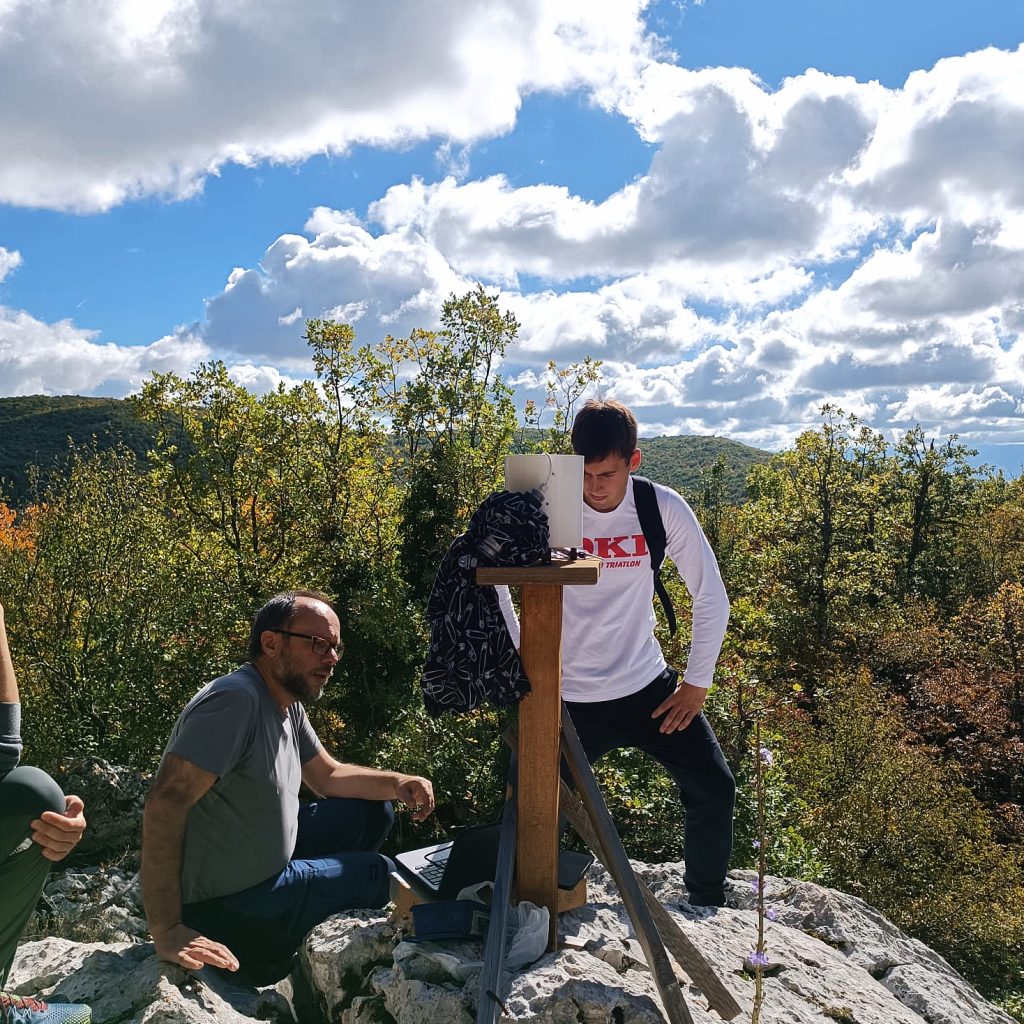
Special attention was devoted to instruments used for continuous monitoring of precipitation, temperature, relative humidity, and CO₂ concentration within the CARDIKARST project. Additionally, students had the opportunity to use a thermal camera, with which they recorded the cave entrance to identify thermal flows and zones of pronounced temperature contrasts between the interior and the outside environment.
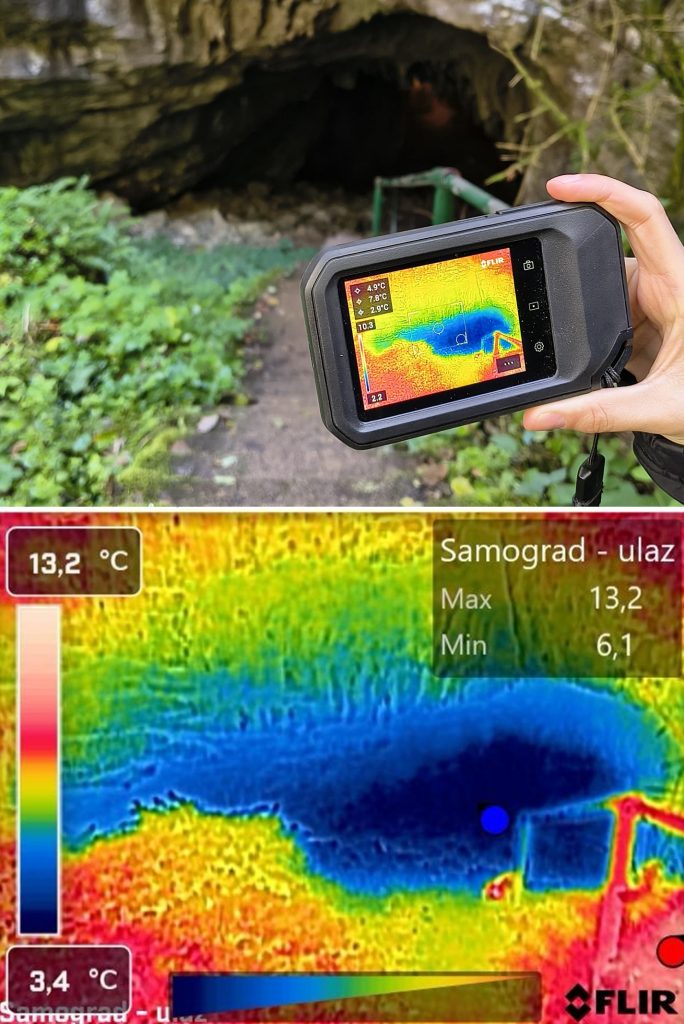
After a short training session, the students used a map of Samograd Cave to independently design a strategy for spot measurements. Based on the cave’s morphology and microclimatic zoning, they defined several points along the main profile and carried out on-site measurements of air temperature, relative humidity, and CO₂ concentration at each location. Data were collected using portable instruments, with notes on point positions and environmental conditions during measurement. The results were later compared with data from continuous monitoring, enabling students to understand the differences between spot and continuous measurement methodologies. One of the tasks also included collecting photo documentation, an important tool for data interpretation.
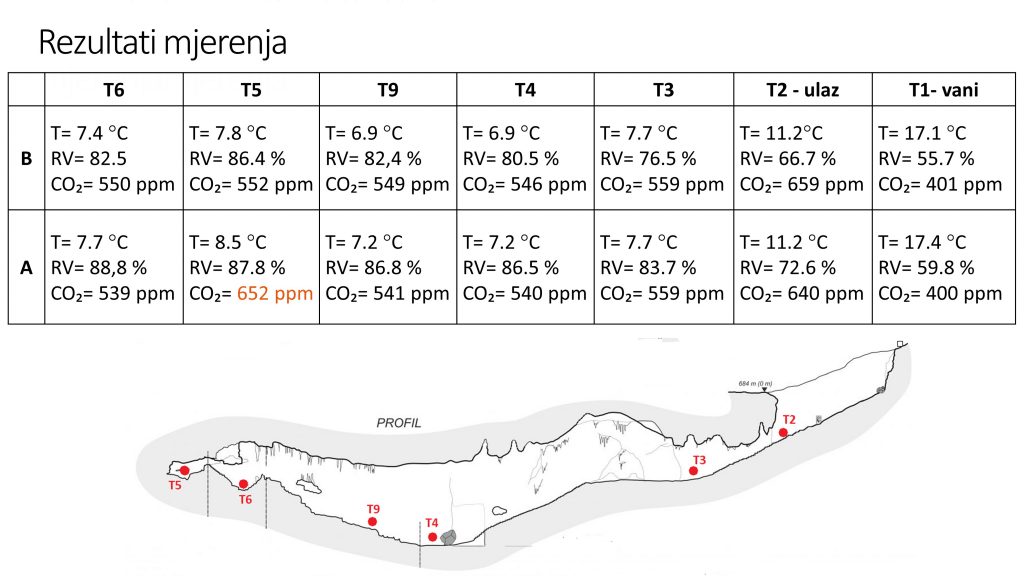
The fieldwork in Samograd Cave enabled students to apply their theoretical knowledge in geoecology, microclimatology, and speleology to real research conditions, thus directly connecting the knowledge and experience gained throughout the project. They acquired practical experience in operating measuring instruments, navigating and planning in a new subterranean environment using the cave map, and interpreting microclimatic processes in karst systems aimed at sustainable management of sensitive habitats and visitor use.
Using the collected data, the students prepared a group presentation which they later presented to their peers in the course Applied Geoecology. The activity also strengthened cooperation between the Department of Geography, Faculty of Science, University of Zagreb, and the Grabovača Cave Park, and inspired student interest in participating in future phases of the CARDIKARST project and related research.